

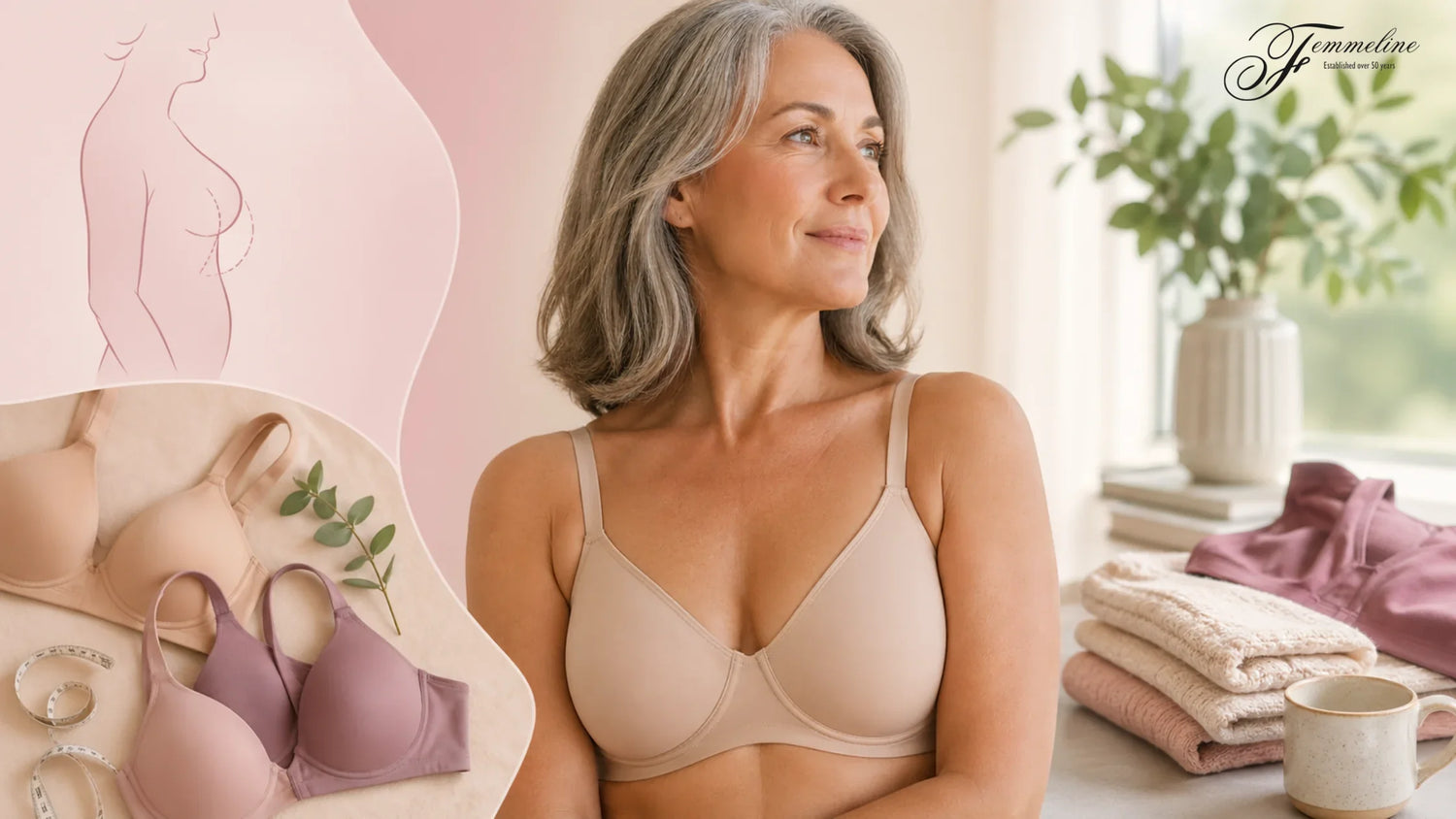
Menopause brings with it a wide range of physical changes, and the breasts are no exception. Many women going through perimenopause or menopause notice that their bras no longer fit the way they used to, even when their overall weight has not changed significantly. Cups that once fitted perfectly now feel too small or too large. Bands that felt comfortable now dig in or ride up. Shapes that felt natural now feel unfamiliar.
These changes are completely normal, and they are far more common than most women realise. Understanding what is happening to your body during this stage of life makes it much easier to find bras that fit well, feel comfortable, and restore your confidence.
At Femmeline, we work with women at every stage of life. Our team of experienced fitters in Croydon regularly help women navigate the changes that come with menopause, and we understand that finding the right fit during this time requires both knowledge and patience.
Why Menopause Changes Your Breasts
The changes menopause brings to the breasts are driven primarily by shifting hormone levels. As oestrogen and progesterone decline, the breast tissue itself undergoes a process called involution, where the milk-producing glandular tissue is gradually replaced by fatty tissue. This process changes not just the size of the breasts but their texture, firmness, and the way they sit on the chest.
The result is that breasts often become softer and less dense than they were during the reproductive years. This is a natural part of ageing, but it has very real implications for bra fit. A bra that worked perfectly for firmer, denser breast tissue may no longer contain or support softer tissue in the same way.
Hormonal fluctuations during perimenopause, the transitional period before menopause is confirmed, can also cause temporary breast swelling and tenderness, which may mean your size fluctuates from month to month before eventually settling into its post-menopausal state.
Common Breast Changes During Menopause
Increase in breast size
As glandular tissue is replaced by fat, which is less dense, some women experience an increase in overall breast size even without significant weight gain. This is particularly noticeable in women who gain weight around the midsection during menopause, as fatty tissue tends to accumulate across the whole body including the breasts.
Decrease in breast firmness
The loss of oestrogen reduces the elasticity of the skin and the ligaments that support the breast. This leads to a softer, less firm feel and often a change in how the breast sits on the chest. Breasts may sit lower than before and spread more to the sides, which directly affects how cups fit.
Changes in breast shape
The shift from dense to fatty tissue, combined with reduced skin elasticity, can change the overall shape of the breast. Many women find their breasts become less projected and more spread across the chest. This means that cup styles that once worked well may no longer contain the tissue properly, and different bra shapes may be needed.
Breast tenderness and sensitivity
Hormonal fluctuations during perimenopause can cause periodic breast tenderness, particularly around the nipple area. During these periods, seam-free or soft-cup bra styles are often more comfortable than structured underwire options.
How These Changes Affect Your Bra Fit
The physical changes of menopause translate into very specific fit issues that many women struggle to identify on their own. The most common ones our fitters see include the following.
Cups that no longer contain the tissue
As breast tissue softens and changes shape, it may no longer fill a cup the way it once did. Some women find that tissue migrates to the sides of the cup or underneath the arm, escaping the cup altogether. This suggests that the cup shape, not just the cup size, may need to change.
Band sizing issues
Weight changes around the midsection during menopause can mean the band size that has served you for years is no longer accurate. A band that is too small will dig in and cause discomfort, while a band that is too large will not provide adequate support and will ride up at the back.
Underwire discomfort
Changes in breast position and tissue softness can make previously comfortable underwire bras feel uncomfortable. The wire may begin sitting on tissue rather than the chest wall, or the cup may no longer support the tissue in the right position relative to the wire.
What Bra Styles Work Best After Menopause
The good news is that with the right guidance, finding comfortable and well-fitted bras after menopause is entirely achievable. The key is to approach this stage with an open mind about size and style, rather than assuming the bra you wore ten years ago still applies.
Full-cup bras
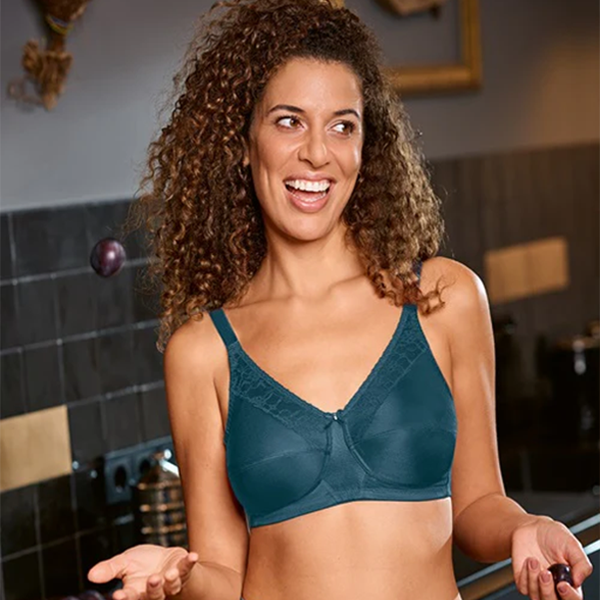
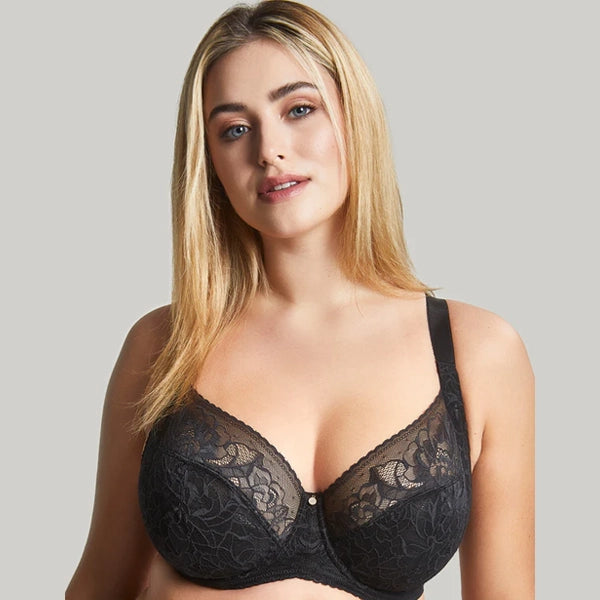
Full-cup bras are often the most supportive choice for post-menopausal breasts. The deeper, wider cup contains softer, more spread tissue more effectively than balconette or plunge styles. Look for full-cup styles with side support panels, which help gather tissue from under the arm back into the cup.
Non-underwire and soft-cup bras
If underwire bras have become uncomfortable, a well-constructed non-underwire bra with a firm band is a practical alternative. Modern wire-free full-cup styles have improved significantly and can provide excellent support for softer breast tissue without the rigidity of an underwire frame.
Minimiser bras
For women who experience an increase in breast size during or after menopause, a minimiser bra can help manage the silhouette under fitted clothing. Minimiser styles redistribute tissue across a wider base, reducing forward projection and creating a smoother look under tailored garments.
Seamless and soft-fabric bras
During periods of breast tenderness or skin sensitivity, seamless bras made from soft, breathable fabrics such as microfibre or cotton blends can provide comfortable daily coverage without irritation. These are worth having in your rotation particularly during the perimenopausal transition.
When to Get Re-Fitted
The most important piece of advice for women going through menopause is this: do not assume your old bra size still applies. Bra size is not fixed for life. It changes with pregnancy, weight fluctuation, surgery, and age. Menopause is one of the most significant triggers for a size change that many women experience after their thirties.
We recommend getting a professional fitting if any of the following applies to you.
- Your bras have started feeling uncomfortable after years of being fine
- You are experiencing spillage, gaps, or tissue escaping the cups
- Your band rides up at the back or digs into your skin
- Underwire bras that used to be comfortable now feel wrong
- You have not been professionally fitted in more than two years
At Femmeline in Croydon, we offer private one-on-one fittings that are unhurried and sensitive to the changes your body is going through. Our experienced team understands that menopause is a significant life transition, and we approach every fitting with care, patience, and genuine expertise.
Frequently Asked Questions
Q. Does menopause always cause breasts to get bigger?
Not always, but it is common. Many women experience an increase in breast size during and after menopause due to the replacement of glandular tissue with fatty tissue and weight changes around the body. Others may notice that their breasts become softer and change shape without a significant increase in overall size. Every woman's experience is different.
Q. Why do my bras feel uncomfortable during menopause even though my size seems the same?
Changes in breast tissue density, firmness, and shape can make a previously well-fitted bra feel wrong even when the measurements appear similar. The issue is often the cup shape rather than the cup size. Softer tissue behaves differently inside a cup than firm tissue, and a different cup style may fit better even if the labelled size is the same.
Q. Are wire-free bras better during menopause?
Not necessarily, but they can be more comfortable for some women, particularly during periods of breast tenderness or sensitivity. The right choice depends on your cup size, the support you need, and your personal comfort preference. Many women continue wearing underwire bras comfortably after menopause once they are properly refitted.
Q. How often should I get a bra fitting during and after menopause?
We recommend a professional fitting at least once during perimenopause, and again once menopause has been confirmed, as breast changes can continue for several years. After that, annual fittings are a good practice to ensure your bras continue to fit correctly as your body settles into its post-menopausal state.
Q. Can the right bra help with back pain during menopause?
A well-fitted bra can make a meaningful difference to upper back and shoulder comfort, particularly if your breasts have increased in size during menopause. A bra that provides proper support distributes breast weight more evenly and reduces the strain on your shoulders and spine. If you have been experiencing new or worsening back discomfort, a fitting is a worthwhile first step.
Q. Where can I get expert bra fitting advice in Melbourne during menopause?
Femmeline in Croydon provides private, professional bra fittings for women at every stage of life, including perimenopause and post-menopause. Our team of experienced corsetieres takes a sensitive, patient approach to fitting and can help you find styles that work with your body as it is today. Visit us at 14 Hewish Road, Croydon VIC 3136, or call us to arrange an appointment.




Leave a comment
This site is protected by hCaptcha and the hCaptcha Privacy Policy and Terms of Service apply.