

It is one of the most common questions women ask when shopping for bras: should I choose underwire or wire-free? Both styles have devoted fans, and both have genuine advantages depending on your body, your lifestyle, and what you are wearing. The answer is rarely one or the other. For most women, the ideal wardrobe includes both, used at the right times.
At Femmeline, we have been fitting women of all shapes and sizes for over 67 years. Our team of experienced corsetieres sees this question come up every single day in our Croydon fitting rooms. This guide breaks down everything you need to know so you can make the right choice for your body, with confidence.
What Is an Underwire Bra?
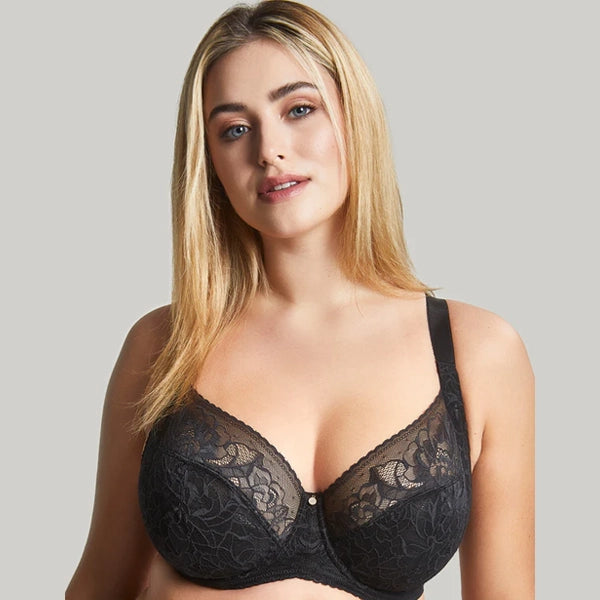
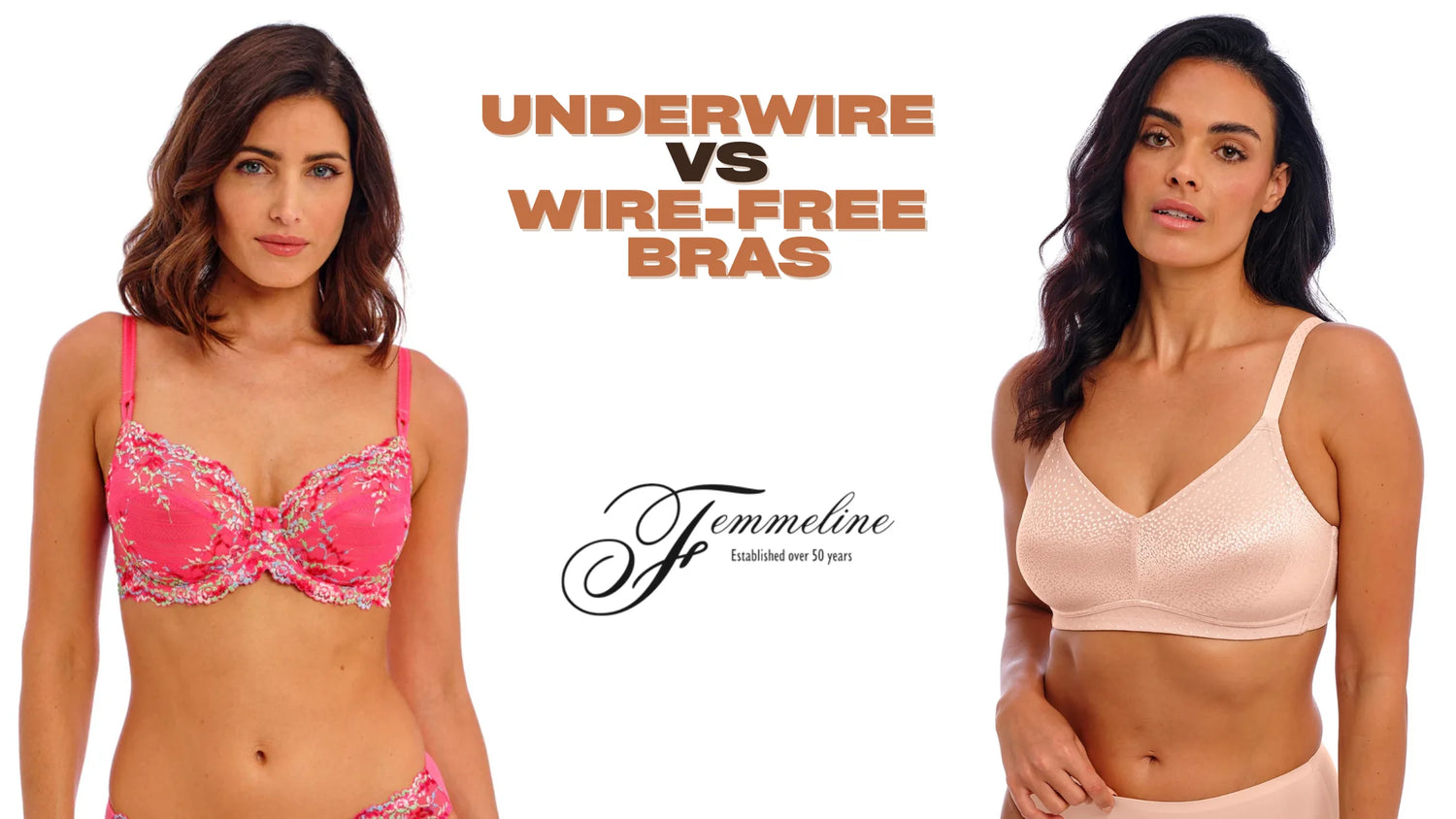
An underwire bra features a thin, curved strip of metal or rigid plastic sewn into the fabric beneath the cups. This wire runs along the base and sides of each cup, following the natural contour of the breast. Its primary job is to anchor the bra to your ribcage, lifting the breast tissue upward and keeping everything firmly in place throughout the day.
Underwire bras are typically recommended for:
- Women with larger cup sizes who need structured support
- Occasions that require a defined, polished silhouette
- Outfits where bra movement or shifting would be noticeable
- Women who prefer a lifted, separated shape
When fitted correctly, an underwire bra should be completely comfortable. The wire should sit flat against your ribcage, not on any breast tissue. If an underwire digs in or pokes you, it is almost always a sizing issue rather than a problem with underwire bras in general. A professional fitting will resolve this immediately.
What Is a Wire-Free Bra?
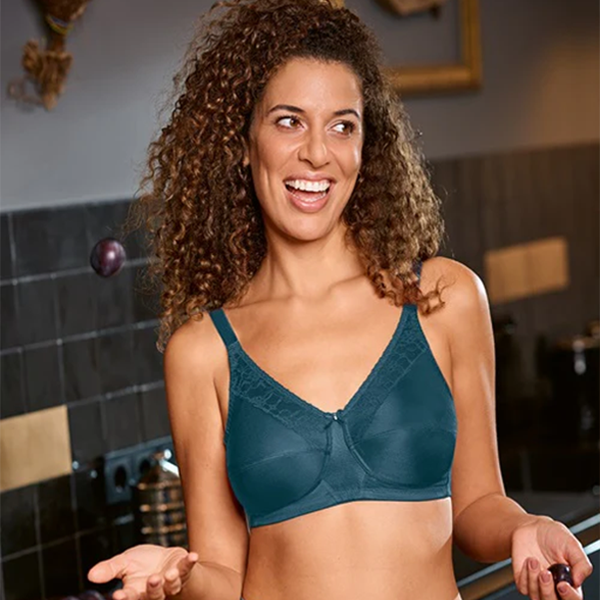
A wire-free bra, also known as a wireless or non-underwire bra, relies entirely on its fabric, construction, and band to provide support. Without a rigid frame, these bras move more naturally with the body. Modern wire-free bras have come a long way and can offer excellent support, particularly for smaller to medium cup sizes.
Wire-free bras are typically recommended for:
- Everyday wear and relaxed occasions
- Sleeping or resting at home
- Post-surgery recovery, including after breast cancer treatment
- Women with sensitivities, skin conditions, or lymphedema
- Pregnancy and breastfeeding, when breast tissue changes frequently
The key to a well-fitting wire-free bra is a firm, supportive band. Because there is no wire to anchor the cups, the band does most of the heavy lifting. If the band feels loose or rides up, the bra will not provide the support you need.
Support: How Do the Two Compare?
This is where the debate gets interesting. Many women assume wire-free automatically means less support, but this is not always the case.
For smaller cup sizes (A through C), a well-constructed wire-free bra can offer all the support needed for most daily activities, including light exercise. The softer structure is often more comfortable over long periods without any noticeable difference in lift or shape.
For larger cup sizes (D and above), underwire bras generally provide significantly better support. The wire helps distribute the weight of the breasts more evenly across the ribcage, reducing the pressure on your shoulders and back. Without this structure, larger-busted women may find wire-free bras offer inadequate lift and can cause discomfort over time.
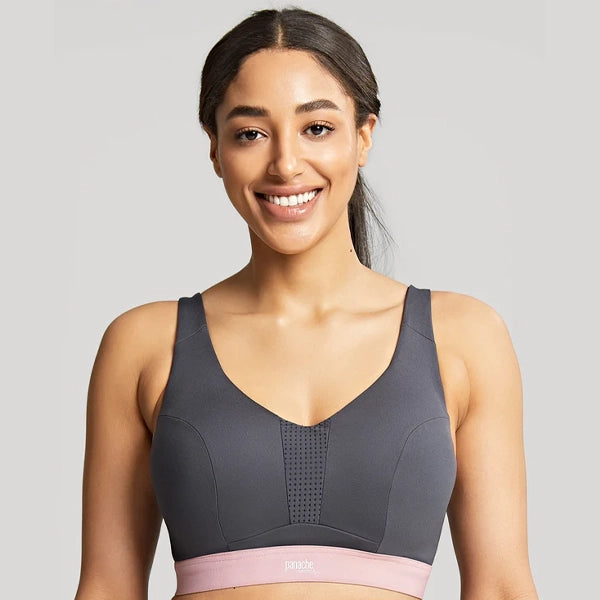
The exception is high-quality wire-free sports bras and specialised full-cup wireless styles, which use reinforced fabric panels and wide bands to compensate for the absence of a wire. At Femmeline, we stock a carefully curated range of both styles across all cup sizes so you can find what genuinely works for your shape.
Comfort and Everyday Wear
Comfort is highly personal, but there are some consistent patterns our fitters observe.
Women who spend long hours sitting at a desk, or who are on their feet all day, often prefer wire-free options for extended comfort. There is no rigid frame pressing into the ribcage, which many women find noticeable towards the end of a long day.
On the other hand, women who need consistent lift and shape throughout the day, particularly for formal or professional settings, often find underwire bras far more comfortable in the long run. Without that structure, repositioning and adjusting becomes a recurring distraction.
The honest answer is that a correctly fitted underwire bra should not cause discomfort. If yours does, something is wrong with the fit. Our fitters at Femmeline regularly help women who have been avoiding underwire bras for years due to bad fitting experiences, only to discover that the right size changes everything.
When to Choose Each Style
Choose an underwire bra when:
- You are wearing fitted, structured, or formal clothing
- You need consistent shape and lift throughout a long day
- You have a larger bust and need maximum support
- You are attending a special occasion or professional event
Choose a wire-free bra when:
- You are at home, resting, or in a casual setting
- You are recovering from breast surgery or experiencing tenderness
- You are pregnant or breastfeeding and your size is changing
- You have lymphedema or skin sensitivities that make rigid structures uncomfortable
- You prefer a softer, more relaxed feel for all-day wear in smaller cup sizes
A Note on Post-Surgery and Medical Considerations
For women who have had a mastectomy, lumpectomy, or any form of breast surgery, wire-free bras are almost always the recommended starting point during recovery. Underwire bras can press on scar tissue and interfere with healing, and should only be reintroduced with guidance from your medical team and a trained fitter.
At Femmeline, we have decades of experience fitting women after breast surgery. Our team understands the physical and emotional dimensions of this process, and we offer private, unhurried fittings to help you find the right bra at every stage of your recovery. We also carry a full range of compression bras and lymphedema bras for women managing ongoing symptoms.
The Bottom Line
Underwire and wire-free bras each have a place in a well-considered bra wardrobe. The choice comes down to your cup size, your daily activities, and how your body feels. Rather than picking one and sticking to it, most women benefit from having both options available and wearing the right one for each situation.
If you are unsure which works best for your body, or if you have never had a professional fitting, we warmly invite you to visit Femmeline in Croydon. Our experienced team will take the time to understand your needs and find the right fit for you, whether that is underwire, wire-free, or a combination of both.
Frequently Asked Questions
Q. Are underwire bras bad for your health?
No. There is no credible medical evidence that correctly fitted underwire bras cause health problems. The key phrase is correctly fitted. An underwire that sits on breast tissue rather than the chest wall, or a band that is too tight, can cause discomfort and pressure. These are fit issues, not inherent problems with underwire bras. A professional fitting eliminates them.
Q. Can wire-free bras provide enough support for large busts?
For larger cup sizes, most standard wire-free bras will not offer sufficient support for all-day wear. However, some specialist wire-free styles, particularly those with reinforced panels and firm bands, can work well. Our fitters can help you identify whether a wire-free option will meet your needs, or whether underwire is the better choice for your size.
Q. Is it okay to wear a wire-free bra every day?
Absolutely, provided it fits well and gives you the support your body needs. Many women wear wire-free bras daily with complete comfort. The important thing is that the band fits firmly, the cups contain the breast tissue fully, and straps are adjusted to support without digging in.
Q. Should I wear wire-free after breast surgery?
In most cases, yes, particularly in the early stages of recovery. Wire-free bras avoid putting pressure on surgical sites and scar tissue. Your surgeon will advise on when it is safe to return to underwire styles. At Femmeline, we offer specialised post-surgery fittings and carry a full range of post-operative and compression bras.
Q. How do I know if my underwire bra fits correctly?
The wire should lie flat against your ribcage at all points, sitting completely beneath the breast tissue. It should not dig into the sides of your breasts, poke out of the fabric, or create any pressure on soft tissue. The centre gore (the panel between the cups) should sit flat against your chest. If any of these things are happening, your size is likely off, and a fitting will resolve it quickly.
Q. Where can I get a professional bra fitting in Melbourne?
Femmeline in Croydon offers private, one-on-one bra fittings by experienced, trained corsetieres. We fit women of all shapes, sizes, and needs, including post-surgery and medical fittings. Visit us at 14 Hewish Road, Croydon VIC 3136, or call us to arrange an appointment.





Leave a comment
This site is protected by hCaptcha and the hCaptcha Privacy Policy and Terms of Service apply.